Our Operations experts
View all Operations experts
Over the last years, supply chain management has undergone a tremendous change. The digitization of supply chains enables companies to address new requirements of customers, challenges on supply side and expectations in efficiency improvement. Supply chain 4.0 creates a disruption and requires companies to rethink the way, they design their supply chains. On top of this global mega trends change customer expectations and innovative technologies massively transform traditional ways of working.
Megatrends, emerged technologies and customer expectations are altering traditional ways of working
Global Megatrends
- Complexity & Connectivity: trade wars, cyber attacks, new network skills
- Globalization & Urbanization: wealth shifting, cities as states of tomorrow
- Neo-ecology: reducing carbon emissions, change in global consumption values
- Aging Society: changing demographics, reduced labor availability
- Pandemic – COVID-19: disrupted traditional supply chains require new ways of working and collaborating
Digital Transformation
- Big Data & Artificial Intelligence
- Robots & Drones
- Internets of Things
- Blockchain
- 3D Print
- Augmented & Virtual Reality
End-Customer Expectations
- Catch me in Seconds: expectation of all channels to be unified
- Personalization: freedom of choice, included in product or service design, influence brand image
- Health: healthy lifestyle, change in nutrition, health gadgets
- Sharing & Reusing: experiences over ownership, refilling and renting, subscription
To build on these trends and adapt to the changed requirements, supply chains need to become much more faster, flexible, and efficient.
BearingPoint’s service line “Operations” is predestined to meet current and future challenges and transform them into competitive advantages – in all aspects: From strategy and organization to processes and IT systems complemented by tailored IP assets delivering sustainable value. We individually customize our service offerings to our customers’ needs. Our capabilities and services are clustered around the following seven domains.


From manual tasks to automated precision: Röhm’s journey to efficient warehouse product management
Managing a vast array of raw materials in production and warehousing environments like Röhm’s requires more than just manpower, it demands precision, visibility, and the right digital tools. In order to meet this challenge, Röhm turned to BearingPoint’s EWM Efficiency Enhancer. This solution improved warehouse operations by optimizing material maintenance and tracking, ensuring a reliable supply chain from end to end.
Information Hub

Integrated planning: strategically critical, but execution still lags
Integrated planning is widely recognized as a strategic priority, yet execution continues to lag. Fragmented processes, outdated planning methods, and limited system integration prevent organizations from turning ambition into impact.

Rethinking contract lifecycle management – Strategic insights for business and public administration
In today’s complex business and public sector environments, effective contract management is more critical than ever. Contracts govern key business relationships, from supplier agreements and customer arrangements to strategic partnerships. In our latest BearingPoint study, we examine the current state of contract lifecycle management (CLM) and share actionable recommendations for building resilient, future-proof contract management across the enterprise.

From manual tasks to automated precision: Röhm’s journey to efficient warehouse product management
Managing a vast array of raw materials in production and warehousing environments like Röhm’s requires more than just manpower, it demands precision, visibility, and the right digital tools. In order to meet this challenge, Röhm turned to BearingPoint’s EWM Efficiency Enhancer. This solution improved warehouse operations by optimizing material maintenance and tracking, ensuring a reliable supply chain from end to end.


Delhaize strengthens data governance with BearingPoint to drive business agility and trust
Delhaize partnered with BearingPoint to implement a unified data governance framework, making data central to operations and improving efficiency through standardized processes and clear roles. This transformation broke down data silos, increased data accuracy, and enabled reliable analytics across the organization. As a result, Delhaize enhanced collaboration, strengthened its data-driven culture, and improved day-to-day operations.
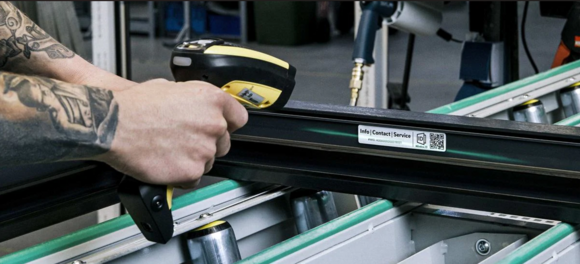
REHAU Industries' journey to operational excellence through procurement optimization
REHAU Industries aimed to enhance operational efficiency by automating its acquisition processes. Partnering with BearingPoint, the company implemented the cutting-edge e-procurement platform Coupa, significantly boosting productivity and ensuring top-tier compliance.

Future of Supply chAIns - designing a target operating model for AI-driven enterprises
The future target operating model is not an evolution of the past. It is a reset—a shift to an adaptive, Demand Driven, AI-native architecture capable of sensing change, making decisions, and executing in real time.


The performance and sustainability paradox in supply chains
Is it possible to reconcile the twin goals of economic efficiency and sustainability within the current economic paradigm? Since the Paris Agreement and growing public scrutiny of corporate environmental practices, companies have been increasingly committed to sustainability. However, many remain hesitant due to concerns about financial costs.